
How we verify our equipment and licenses, and how you can check any Chicago clinic
When people shop for laser hair removal in Chicago, almost all the comparison happens on the surface. Price, reviews, how nice the website looks, whether the Instagram is good. Those things matter a little. The two things that matter most, the actual machine in the treatment room and the actual license of the person holding it, are the two things almost nobody checks. Partly that’s because clinics don’t make it easy, and partly because most people don’t know these are verifiable facts and not marketing claims.
So this post does two things. It shows you exactly how we verify our own equipment and our providers’ credentials, and it shows you how to run the same checks on any clinic in the city, including ours. You shouldn’t have to take our word for any of it.
Why these two things decide your result
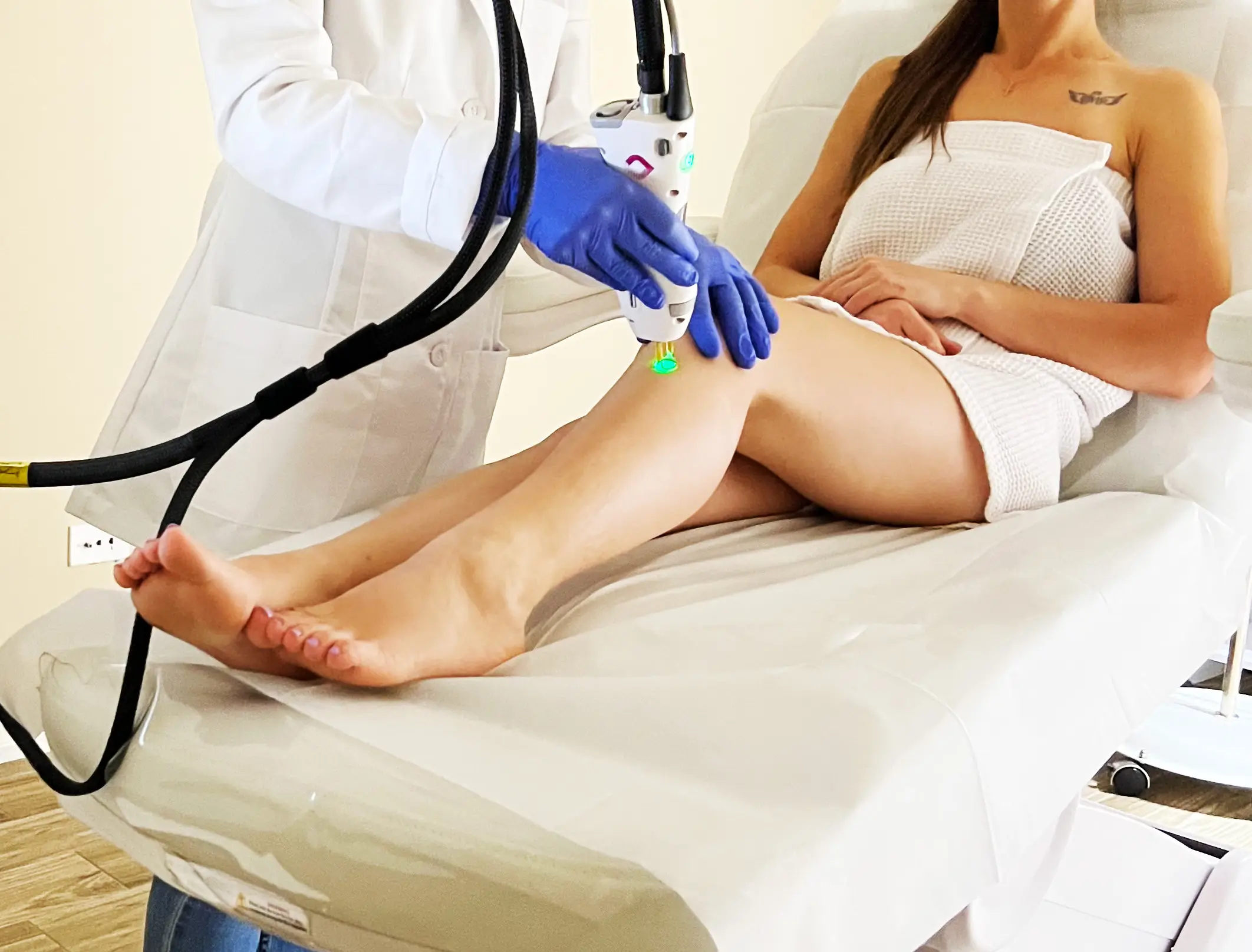
A laser is a medical device. The wavelength and energy it delivers are what damage the follicle, and the wrong device on the wrong skin is how people end up with burns or pigment changes instead of smooth skin. The person operating it is making real clinical calls: reading your skin, adjusting settings, deciding when not to treat you at all. Both of our laser technicians are licensed nurse practitioners, which is a deliberate choice and not an industry norm. A lot of clinics hand the laser to staff with far less medical training.
That combination, the right machine and a medically trained operator, is the whole game. Everything else is comfort and decor. So those are the two things worth verifying before you book anywhere.
How to verify the person holding the laser
In Illinois, professional licenses for nurses and nurse practitioners are public record, and the state lets anyone look them up for free. The tool is the Illinois Department of Financial and Professional Regulation license lookup. You can check any Illinois professional license yourself through the official IDFPR database, which the state maintains and updates daily and which is approved as a primary source for verification.
Here’s how to use it. Go to the IDFPR license lookup, choose the Professional Regulation option, and search by the person’s name. You’ll see their license type, whether it’s active, and any disciplinary history attached to it. For our clinic, our providers are licensed APRNs and FNPs, and their names are on our site, so you can run them through the database and confirm what we say is true.
If a clinic won’t tell you the name and credential of the person who will actually treat you, that reluctance is its own answer. A real license has nothing to hide behind.
How to verify the machine
Equipment is the part clinics are vaguest about, because “state-of-the-art laser technology” sounds great and commits to nothing. Push past the slogan and ask for the manufacturer and model. That single question separates clinics that bought a serious medical platform from ones that bought the cheapest device that clears a path to a sale.
We run the Candela GentleMax Pro Plus. It’s a dual-wavelength platform, with an Alexandrite laser at 755 nanometers and an Nd:YAG at 1064 nanometers, which is what lets one machine safely treat Fitzpatrick I through VI. That dual-wavelength point isn’t trivia. It’s the reason your skin tone should decide the machine rather than the price, and it’s why a single-wavelength diode laser can be the wrong tool for darker skin no matter how the settings are dialed.
Once you have the manufacturer and model, you can verify the device is FDA-cleared for hair removal. The FDA keeps a public 510(k) clearance database, and a legitimate hair removal laser will have a clearance number on file. We’re open about our platform because we’d rather you check than wonder, and we’ve written before about why we upgraded from the older GentleMax Pro to the Pro Plus and what patients actually notice as a result.
Why this matters more for some skin than others
Verification isn’t equally urgent for everyone, and it would be dishonest to pretend otherwise. If you have very fair skin and dark hair, most decent lasers will treat you reasonably well, and a weaker clinic can get away with a lot. The risk climbs as skin gets darker.
For Fitzpatrick IV, V, and VI, the machine and the operator’s judgment are the difference between a good result and a real injury, which is exactly why we treat darker skin tones with a specific machine and approach instead of a generic protocol. If your skin is in that range, do not skip the verification steps above. Ask the model, confirm the wavelength, check the license. A clinic that gets defensive about those questions is telling you something useful.
Transparency you can check before you walk in
Credentials and equipment are the big two, but the same logic runs through everything a clinic does. A place confident in its work tends to publish the things weaker clinics keep vague. Our laser hair removal prices are listed openly for the same reason our equipment and licenses are: if you can verify it before you book, you can trust it after.
You can apply this test to any clinic, not just ours. Can you find the price without a “call for a quote” wall? Can you find the machine model? Can you find the provider’s name and credential? The number of yeses tells you a lot before you ever sit in the chair.
The short version
The two facts that decide your laser hair removal result, the machine and the operator, are both verifiable, and you don’t need our permission to check them. Use the IDFPR database to confirm any Illinois provider’s license, ask any clinic for its laser’s manufacturer and model and confirm the FDA clearance, and treat vagueness as an answer in itself. When you’re ready to see how we hold up to those checks, you can book a free consultation with our team and ask us anything on this list in person.