

What the patch test tells us, and why we won’t skip it even if you ask
Almost every week, someone sits down in our Old Town consultation room, looks at the schedule, and asks if we can skip the patch test and just start the real session. Usually it’s a returning client who has done this before somewhere else, or someone whose wedding is six weeks out and who did the math on session timing. The request is reasonable. The answer is still no, and this post is the long version of why.
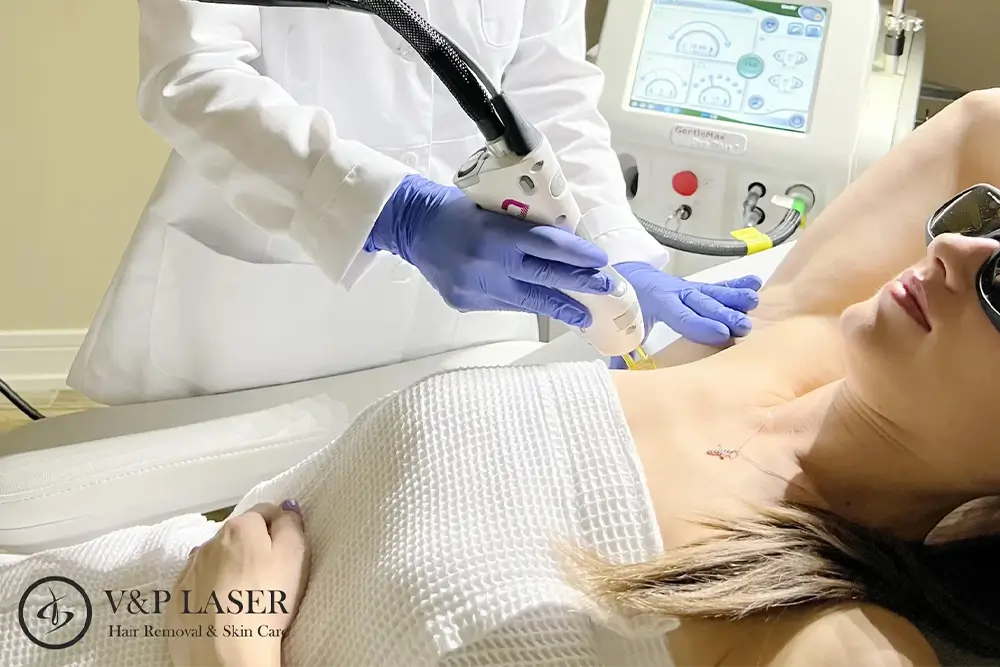
A patch test is a small thing. We treat a coin-sized area at the settings we plan to use, then wait to see how your skin answers before we commit to the rest. Two minutes of treatment, then time. People assume it’s a formality, a box the clinic checks for liability. It isn’t. It’s the single piece of information that tells us whether the plan in your chart is the right plan for the skin you actually walked in with.
Your skin on paper vs. your skin in the room
When we build a treatment plan, we start with what we can see and what you tell us: your skin tone on the Fitzpatrick scale, your hair color and coarseness, your history with sun, any medications. That gets us a strong starting estimate for laser settings. It does not get us certainty.
Skin doesn’t always behave the way the chart predicts. Two people can read as the same Fitzpatrick type and respond very differently to the same energy, because melanin sits at different depths, because one of them got a little sun two weeks ago and didn’t think it counted, because hormones change how a follicle holds pigment. We see this constantly with deeper skin tones, which is part of why we treat darker skin with extra care and a different machine setup. The patch test is where the chart meets reality.
What we’re actually watching for
After a patch test, we’re not just glancing at the spot and nodding. There’s a short list of things the skin can tell us in the first several minutes and over the next day.
We want to see a specific reaction called perifollicular edema, which is mild swelling and redness right around each treated follicle. That tells us the energy reached the follicle and did its job. If we see that and nothing worse, the settings are working.
What we don’t want is the skin reacting as a whole sheet instead of follicle by follicle. Gray or white skin, immediate strong blistering, or a burn means the surface absorbed too much energy. The FDA lists skin color changes, blistering, and scarring among the known risks of laser procedures, and the patch test exists precisely so we catch the conditions for those before they happen across a whole Brazilian or a full back, not after.
The honest truth is that a bad reaction on a coin-sized patch is a minor, fixable thing. The same reaction across a large treatment area is weeks of healing and possible pigment change. We would rather find the problem on the small square.
The wrong machine makes the patch test even more important
Settings are only half the equation. The other half is whether the laser pointed at you was built for your skin in the first place. A device with the wrong wavelength for a darker skin tone can look fine at low settings and still be the wrong tool, which is the whole argument behind letting your skin tone choose the machine rather than the price.
We run a Candela GentleMax Pro Plus, which carries two wavelengths and lets us treat Fitzpatrick I through VI. The patch test is how we confirm we picked the right wavelength and the right energy for you specifically, not for the average person with your skin type. No machine removes the need for that check. It just gives us more room to adjust when the patch test tells us something.
Why your prep affects the patch test too
One reason we insist on the patch test is that we can’t fully control what you did in the days before. Sun exposure is the big one, and it’s why a fresh tan reschedules an appointment no matter how non-refundable the package was. But shaving matters as well. If the area isn’t shaved properly, the laser can chase pigment down the hair shaft and burn the surface, which is the whole reason shaving before your session isn’t optional. A patch test on a poorly prepped area gives us bad information, so we’d rather reset and do it right.
“But I’ve had laser before”
This is the most common version of the skip request, and we understand it. If you got six sessions on your legs at another clinic with no issues, asking for a patch test on the same legs can feel like we don’t trust you.
Here’s the thing. Different machine, different wavelength, different energy, sometimes different skin than you had a year ago. Our settings are not their settings. A clean history somewhere else is genuinely good information, and we factor it in, but it isn’t the same as watching how your skin responds to our laser at our planned energy. We built a Brazilian treatment timeline from six months of our own patient records partly because results vary so much person to person that we stopped trusting generic numbers. The patch test is the same principle applied to safety instead of timing.
What happens after a clean patch test
Most of the time, the news is good. The patch reacts the way we want, your skin settles within a day, and we move ahead, sometimes in the same visit for small areas, sometimes at the next appointment for larger ones. We’ll also walk you through aftercare for the treated spot, which is the same gentle, fragrance-free approach we use for skin care after any laser session. A patch test isn’t a delay tactic. On small areas it often costs you nothing but a few extra minutes.
And once in a while the patch test changes the plan. We dial the energy down, switch the wavelength, or in rare cases tell you laser isn’t right for your skin or your goals right now. That conversation is uncomfortable. It’s also the entire reason the test exists.
The short version
A patch test is two minutes of treatment and a little patience in exchange for not gambling your whole treatment area on an estimate. We won’t skip it, even when you ask nicely, even when the timing is tight, because the cost of being wrong is paid by your skin and not by our schedule. If you want to start the process the right way, you can book a free consultation and patch test with our team and we’ll show you exactly what we’re looking for.