

What is the best moisturizer after laser hair removal?
Short answer: The best moisturizer after laser hair removal is a fragrance-free, dye-free, non-comedogenic cream with ceramides, hyaluronic acid, or panthenol (vitamin B5) — and nothing else doing extra work on your skin for at least 48 hours. CeraVe Moisturizing Cream, La Roche-Posay Cicaplast Baume B5+, Avène Cicalfate+, and Vanicream Moisturizing Cream are the four most APRNs at our Chicago clinic reach for first. Skip retinoids, AHAs, BHAs, vitamin C, scented lotions, and “tingly” formulas until the skin is fully calm — usually 5 to 7 days.
That is the whole answer. The rest of this guide explains why, what to do on day 1 versus day 7, the mistakes we see most often, and when post-treatment irritation has crossed the line into something a medical provider needs to look at.
Why the moisturizer choice matters more than people think
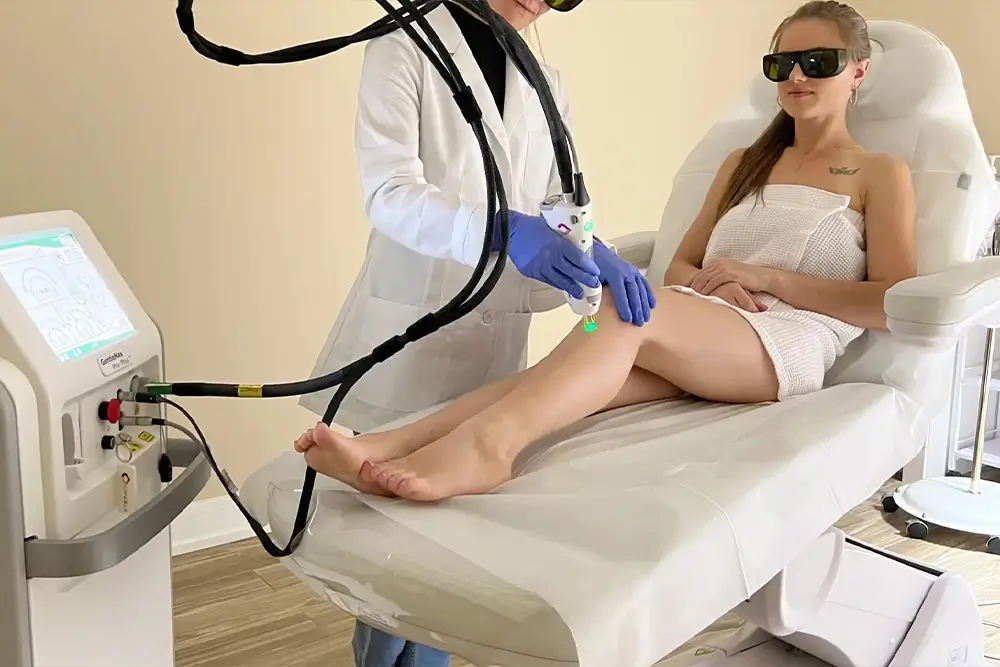
Laser hair removal heats the hair follicle to destroy it. The light energy passes through the skin to reach the pigment in the hair, and even with the cooling Dynamic Cooling Device on a platform like our Candela GentleMax Pro Plus, the surrounding skin gets a controlled thermal injury. That is not a marketing problem to hide — it is how the treatment works.
For the first 24 to 72 hours, the skin barrier is impaired. Transepidermal water loss goes up. The skin feels tight, looks pink, and reacts to things it normally tolerates. A good moisturizer in this window does three jobs: it replaces water the barrier is losing, it adds lipids the barrier needs to rebuild, and it does not introduce anything the immune system will react to.
A bad moisturizer in this window — meaning anything with fragrance, essential oils, alcohol denat, menthol, retinol, or active acids — does the opposite. It stings, prolongs redness, and in our chairs is the single most common cause of “the laser caused a rash.” It usually wasn’t the laser.
What to look for on the ingredient label
Three actives do the heavy lifting after laser:
- Ceramides. These are the lipids your barrier is made of. Topically applied ceramides shorten the time it takes the barrier to recover after disruption. This is why APRNs default to CeraVe and Cicaplast.
- Hyaluronic acid (or sodium hyaluronate). A humectant that pulls water into the upper layers of the skin. Helps with the tight, dehydrated feeling people get on day 2.
- Panthenol (provitamin B5). Reduces itch and visible redness in irritated skin. The clinical evidence here goes back decades — it is the reason La Roche-Posay’s Cicaplast and Bepanthen exist.
You’ll also see niacinamide, allantoin, centella asiatica (cica), and squalane in products marketed for post-procedure care. They are fine. None of them is a deal-breaker either way.
What to avoid for the first 5 to 7 days:
- Fragrance and essential oils (including “natural” ones — lavender and tea tree are common culprits)
- Retinoids of any kind (retinol, retinal, tretinoin, adapalene)
- AHAs and BHAs (glycolic, lactic, salicylic, mandelic)
- Vitamin C in low-pH ascorbic acid form
- Benzoyl peroxide
- Physical exfoliants and scrubs
- Self-tanner and anything with DHA
- Heavy occlusives like petrolatum on the face if you are acne-prone (fine on legs and underarms)
The four moisturizers worth keeping in the cabinet
These are the products our team hands clients on their way out the door. No affiliate links, no kickbacks — just what works.
CeraVe Moisturizing Cream. The tub version, not the lotion. Three ceramides, hyaluronic acid, no fragrance. Heavy enough for legs and Brazilian areas, light enough that most people tolerate it on the face. Cheapest of the four and the one we recommend most.
La Roche-Posay Cicaplast Baume B5+. The closest thing to a “post-procedure” cream that is sold over the counter. Heavy on panthenol, very low irritation profile, dermatologist favorite for a reason. Slightly tacky finish — fine under clothes, not great under makeup. A solid pick after underarm sessions where deodorant is off the table for a day.
Avène Cicalfate+. Sulfate of copper and zinc plus their thermal spring water. The one we prefer for clients who are prone to post-inflammatory hyperpigmentation (PIH), which means anyone with Fitzpatrick III–VI skin or a personal history of dark spots after breakouts. If that’s you, we cover wavelength selection in more detail on our laser hair removal services page.
Vanicream Moisturizing Cream. No dyes, no fragrance, no parabens, no lanolin, no formaldehyde. If you’ve reacted to “gentle” moisturizers before, this is the one to try. It’s the product the National Eczema Association keeps recommending and there is a reason.
A note on two products that get suggested constantly online but we don’t routinely recommend: aloe vera gel (most drugstore versions have fragrance and alcohol in them — read the label), and pure coconut oil (comedogenic, and people with darker skin tones get clogged follicles and PIH from it more often than they realize).
What to actually do, day by day
Day of treatment. Cool compress for 10 to 15 minutes if you feel hot. Apply your moisturizer once it’s stopped feeling like a sunburn — usually within an hour or two. Do not apply deodorant to the underarms, makeup to the face, or anything with active ingredients anywhere. Loose cotton clothing over treated areas.
Days 1 to 3. Moisturize twice a day, more if it feels tight. Lukewarm showers only, no scrubbing the treated area with a washcloth or loofah. No gym, no sauna, no hot yoga. Heat will make the redness worse and can blister already-stressed skin.
Days 3 to 7. Most people are visibly back to baseline by day 3 or 4. You can start regular cleansing again. Hair shedding (“the pepper effect”) usually starts around day 5 to 14 — that is the dead hair working its way out, not new growth, and you can gently exfoliate with a soft washcloth in the shower to help it along once redness is fully gone.
Day 7 and beyond. Resume your normal skincare routine. Wait at least 7 to 14 days before reintroducing retinoids or acids near the treated area. Sunscreen on any treated area that gets sun exposure — SPF 30 minimum, SPF 50 if you’re treating face, neck, or hands — every single day until your next session. Sun exposure is the most common cause of pigment changes after laser, and pigment changes are the most common reason a treatment course gets cut short. Six to nine sessions is the typical course for 75 to 95 percent reduction — our pricing page breaks down single-session versus six-pack costs by area.
When to call your provider versus your doctor
Most post-laser irritation looks worse than it is. Pink skin, mild swelling around the follicles (it looks a bit like goosebumps), itching, and a warm feeling are all normal and resolve within 48 hours. Contact the clinic that treated you if you have:
- Blisters or open skin
- Swelling that is getting worse on day 2 or 3 instead of better
- Pain that your moisturizer and a cool compress can’t manage
- Crusting, yellow discharge, or red streaks spreading away from the treated area — these can suggest infection and need same-day medical attention
- Patches of skin getting noticeably lighter or darker than the surrounding skin, especially after a few weeks
The American Society for Dermatologic Surgery puts the rate of serious adverse events from laser hair removal at well under 1% in trained hands. That number gets worse fast with home devices used on the wrong settings, with treatment too close to recent sun exposure, and with skin types the device wasn’t designed for. If you are darker than Fitzpatrick IV, ask your provider what wavelength they are using before you book — Nd:YAG (1064 nm) is the safer choice for melanin-rich skin, and not every clinic owns one. Our team works exclusively on the GentleMax Pro Plus, which carries both Alexandrite (755 nm) and Nd:YAG on one platform, which is why we can treat I through VI without swapping rooms.
The thing nobody tells you
Most “my laser hair removal went wrong” stories that we see in consultations come down to one of three things: the client used a product they shouldn’t have in the first 72 hours, they got sun on the area before the skin had healed, or they were treated with the wrong laser for their skin type. Moisturizer matters, but it matters as one piece of a 72-hour aftercare protocol, not as a magic recovery product.
Pick something boring from the list above. Use it twice a day for a week. Wear sunscreen. Skip the gym for two days. That covers about 95% of what aftercare actually is. If you’re between sessions and want to walk through your aftercare in person, book a free consultation — we do them six days a week.
About this guide. This article was written by the clinical team at V&P Laser Hair Removal & Skin Care, a Chicago laser hair removal clinic staffed by licensed APRNs and FNPs. It is general information, not medical advice for your specific situation. If you have a reaction that concerns you after a treatment, contact the clinic that performed it or your dermatologist.