

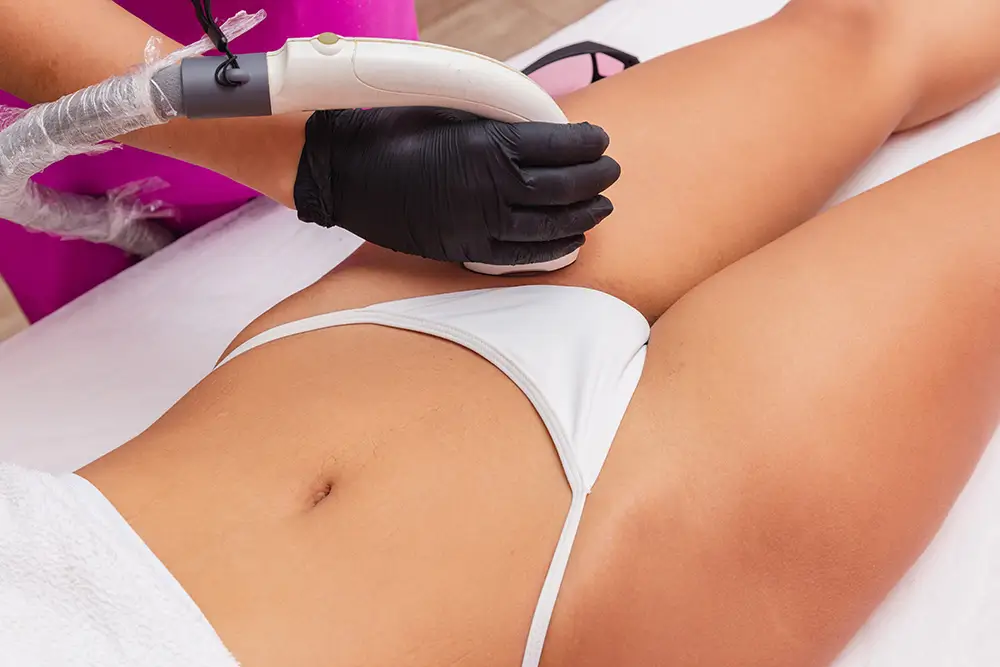
Is Your Skin Ready for AI? Smart Mapping for Safer Brazilian Results in Chicago
If you’ve been researching Brazilian laser hair removal in Chicago, you’ve probably noticed that clinics are starting to talk about “AI-powered” devices and “smart skin mapping.” It sounds high-tech — maybe even intimidating.
But here’s the reality: AI in laser hair removal isn’t about robots taking over your treatment. It’s about making treatments more precise, more personalized, and ultimately safer — especially for delicate areas like a Brazilian.
Chicago med spas are adopting advanced laser platforms that use real-time skin analysis to adjust energy levels based on your skin tone, hair density, and even subtle variations across the treatment area. That matters more than most people realize.
Let’s break down what this actually means — and how to know if your skin is ready.
What “Smart Mapping” Really Means in Laser Hair Removal
In traditional laser hair removal, settings are manually selected by the provider based on skin type and hair thickness. That method can be effective — but it relies heavily on static settings and visual estimation.
Newer laser systems incorporate integrated sensors and intelligent software that:
- Measure melanin levels in real time
- Adjust fluence and pulse duration dynamically
- Adapt to slight variations across the skin
- Provide consistent energy delivery throughout the session
For a Brazilian treatment — where skin tone can vary within a small area — that level of precision reduces the risk of:
- Post-inflammatory hyperpigmentation
- Burns or blistering
- Over- or under-treatment
- Excessive discomfort
In a city like Chicago, where clients represent a wide range of Fitzpatrick skin types, adaptive technology is more than a luxury — it’s a safety upgrade.
Why This Matters for Brazilian Laser Hair Removal
The Brazilian area is one of the most sensitive zones treated with laser hair removal. The skin is thinner. Pigment variation is common. Hormonal hair growth can be dense and coarse.
Without careful calibration, treatments can either be too aggressive or too conservative.
Smart mapping technology allows providers to:
- Treat coarse hair more effectively
- Reduce unnecessary energy on more sensitive areas
- Maintain consistent coverage
- Improve long-term hair reduction outcomes
For clients searching specifically for Brazilian laser hair removal, safety and results are usually the top concerns. Intelligent systems help address both.
Is Your Skin Ready for AI-Assisted Laser?
Technology can improve outcomes — but it doesn’t replace proper preparation.
Before scheduling your Brazilian laser sessions, consider the following:
1. Avoid Sun Exposure
Tanned or recently sun-exposed skin increases the risk of complications. Chicago summers can be intense, especially near the lake. Limit UV exposure for at least two weeks prior.
2. Stop Waxing or Tweezing
Laser targets the hair follicle. If the root is removed, the laser has nothing to treat. Shaving is fine — waxing is not.
3. Disclose Skincare Products
Retinoids, exfoliating acids, and certain brightening agents may increase sensitivity. Your provider should review your regimen beforehand.
4. Understand Your Skin Type
Not all lasers are created equal. Advanced platforms — such as those commonly used in modern medical spas — are designed to safely treat a broader range of skin tones. Make sure your clinic is experienced with your specific Fitzpatrick type.
The Human Factor Still Matters
Even the most advanced system is only as good as the professional operating it.
AI-assisted devices provide data. They do not replace:
- Clinical judgment
- Proper consultation
- Patch testing
- Experience treating intimate areas
A skilled laser specialist like the ones at V&P Laser Hair Removal & Skin Care, knows when to adjust settings beyond automated suggestions and when to slow down or modify technique based on how your skin responds.
Technology enhances expertise — it doesn’t substitute for it.
What Results Can You Expect?
With properly calibrated treatments, most clients notice:
- Gradual thinning after 2–3 sessions
- Reduced ingrown hairs
- Smoother regrowth cycles
- Significant reduction after 6–8 sessions
Hormonal factors and hair density influence outcomes, but intelligent energy delivery can improve consistency and comfort throughout the series.
Conclusion: Smarter Doesn’t Mean Complicated — It Means Safer
AI in Brazilian laser hair removal isn’t a marketing gimmick. When used correctly, smart mapping technology adds a layer of precision that benefits both safety and results.
If you’re considering Brazilian laser hair removal, ask your provider what type of laser system they use and whether it includes real-time skin analysis. It’s a simple question that can make a meaningful difference.
The best treatments combine advanced technology with experienced hands. When those two come together, smoother skin isn’t just possible — it’s predictable.